Camp Fire Legend, Bear Lake Monster
Could a 90 foot monster roam the Bear Lake water?
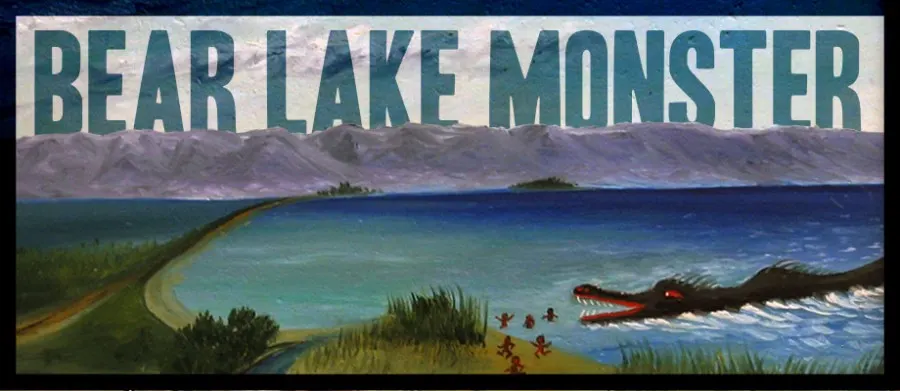
Located in Northern Utah and Idaho, stretching 18.33 miles long and with a maximum depth of 93 feet, Bear Lake is said to hold an underwater monster.
According to Kathy Weiser, a writer from Legends of America, who wrote about the origins of the monster, the legend was supposed to have originated from early Native American tribes, who claimed the sea creature to be 90 feet long, resembling a big snake. They claimed that the beast would drag their tribe members out to the lake, terrifying the people. It is rumored that the monster still exists and is claimed to have been sighted.
During the 19th century, settlers in Bear Lake reported sightings of the monster. In July of 1898, Joseph C. Rieh wrote an article about the sightings of the monster. It was published in Salt Lake City’s Deseret News. In 1870, a fisherman from Springsville found a large, unidentified skull with a five inch tusk on its bottom jaw. In 1871, two local men were fishing on the lake and said they had spotted a large monster in the lake and fired their rifles at it. They said the shots only made the monster swim away. After the nineteenth century, monster sightings decreased.
There are two known descriptions of what the monster is said to look like. One shares resemblance to Nessie, another legend from Loch Ness in Scotland. “People assume that this could be a true description,” says Ed Richards, a local resident in Bear Lake, “But the classic Bear Lake legend describes it as more snake like but with a crocodile head and short legs.”
Ed continues, “I think that if a monster from the dinosaur times were still alive, then that would be believable, but I don’t think something could survive this long.”
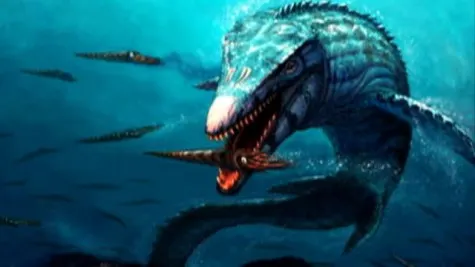
The Loch Ness monster and a version of the Bear Lake monster are both claimed to resemble a prehistoric water animal, the Elasmosaurus.
It is known in history that Utah was once a great lake, Lake Bonneville, that covered nearly the whole state. Prehistoric creatures were said to have once lived in the lake. Trilobite fossils can be found in the Uinta mountains of Utah, providing some evidence of these creatures. Some people question the possibility of a lake monster that has survived through years of geographical change and now lives in Bear Lake, as being an answer to its existence.
By 1961, sightings started again; the monster was said to be seen by a Boy Scout Leader who described a large creature swimming in the lake. In 1996, the monster was named Isabella by a girl from Garden City after she won the naming contest for the monster.
While there are some believers in Isabella, other people are skeptical of her existence. Kim Miller, a local resident of Bear Lake, thinks the monster was made up for tourism purposes. “Bear Lake isn’t the most popular town, so I wouldn’t doubt a legend being made up to spark an interest in people,” she said.
A sign posted on the beach by the lake asks anyone who has seen the monster to report it to the Mayor of Garden City.
Sources
- Article: Bear Lake Utah Sea Monster, by Kathy Weiser, Legends of America (legendsofamerica.com/ut-bearlakemonster.html)
- Photo: Bear Lake Monster, Utah State University Digital Collections (digital.lib.usu.edu)
- Photo: Bear Lake, Utah Monster, Animal Planet, Lost Tapes
Questions people ask
Where did the Bear Lake Monster story come from?
The story spread from articles by Joseph C. Rich, a Latter-day Saint settler, in the Deseret News. His first piece, dated August 3, 1868, described secondhand sightings of a huge creature in Bear Lake and caused a stir in Salt Lake City. Other letters and reported sightings followed over the next decades.
Is the Bear Lake Monster real?
No creature has ever been found. Joseph C. Rich, whose newspaper articles launched the legend, later admitted the stories were a “wonderful first-class lie.” Sightings were still reported in the 1900s, the last widely reported one in 2002, but the monster is now best known as local folklore and a tourist draw.
Why is the Bear Lake Monster called Isabella?
The name came from a contest held during Raspberry Days in Garden City, Utah, in 1996. The winning entry, Isabella, was submitted by an eight year old girl, and the name has stuck with the legend ever since. Garden City sits on the Utah shore of Bear Lake, where much of the monster lore is told.